


Your Leading Electric Butterfly Valve Manufacturer and Supplier in China!
We not only have a young & passionate sales team available 24/7 to serve you, but also a well experienced technical team to help you solve any technical challenges in Valve Automation Solutions.
We have high-precision CNC machining Center and 6 product line for ensuring the stability and reliability of product quality.
Our workshop is an efficient and well-organized workspace, equipped with modern equipment and skilled technicians. Regular equipment maintenance and upkeep are conducted to ensure seamless production processes.
We ensure excellent product quality through rigorous quality control, high-quality materials and manufacturing processes, as well as a focus on customer requirements.
-
![Electric Concentric Butterfly Valve]()
Electric Concentric Butterfly Valve
Add to Inquiry -
![Intelligent Integrated Explosion-Proof Electric Butterfly Valve]()
-
![Explosion-Proof Electric Flange Three Eccentric Hard Sealing Butterfly Valve]()
-
![Electric Sanitary Clamp Butterfly Valve Switch Type]()
Electric Sanitary Clamp Butterfly Valve Switch Type
Add to Inquiry -
![Electric Lug Center Line Butterfly Valve Switch Type]()
Electric Lug Center Line Butterfly Valve Switch Type
Add to Inquiry -
![Electric Lug Type High Performance Butterfly Valve]()
Electric Lug Type High Performance Butterfly Valve
Add to Inquiry -
![Electric Three Eccentric Flanged Butterfly Valve]()
Electric Three Eccentric Flanged Butterfly Valve
Add to Inquiry -
![Odl Electric Three Eccentric Butterfly Valve Switch Type]()
Odl Electric Three Eccentric Butterfly Valve Switch Type
Add to Inquiry -
![Electric Pair Clip High Performance Butterfly Valve]()
Electric Pair Clip High Performance Butterfly Valve
Add to Inquiry -
![Electric Regulating Butterfly Valve Odl Center Line]()
Electric Regulating Butterfly Valve Odl Center Line
Add to Inquiry -
![Electrically Adjusted V Ball Valve]()
Electrically Adjusted V Ball Valve
Add to Inquiry -
![Electric Stainless Steel Middle Line Soft Seal Butterfly Valve]()


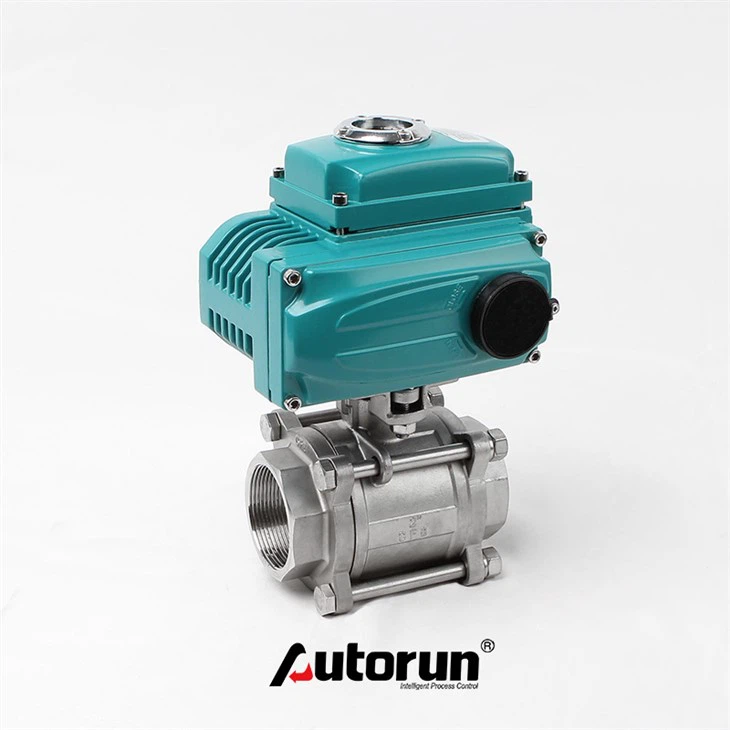
What is an Electric Butterfly Valve?
An electric butterfly valve is a valve that uses an electric motor to open, close, and control the flow of liquids and gases in pipelines. It's made up of a valve and an electric actuator that rotates 90 degrees. The valve is activated and closed based on the actuator's rotation.
How Does an Electric Butterfly Valve Work?
A butterfly valve is a valve used for flow regulation in large pipe diameters in which the disc takes the form of a disk. The operation is similar to that of a ball valve. A plate or disc is positioned in the center of the pipe. The disc has a rod passing through it that is connected to an actuator on the outside of the valve. Rotating the actuator turns the disc either parallel or perpendicular to the flow. Unlike a ball valve, the disc is always present within the flow, therefore a pressure drop is always induced in the flow, regardless of valve position.
A butterfly valve actuator controls the flow of gas or liquid by means of a disk, which turns on a diametrical axis inside a pipe or by two semicircular plates hinged on a common spindle, which permits flow in only one direction. These actuated butterfly valves offer a rotary stem movement of 90 degrees or less, in a compact design. Unlike ball valves, butterfly valves do not have any pockets in which fluids may become trapped when the valve is closed.


Different Types of Electric Butterfly Valve
Metal bellows direct-acting electric butterfly valve
It is suitable for bottom pressure, medium and small diameter steam medium.
Plastic film direct-acting electric butterfly valve
It is suitable for midsole pressure, medium caliber gas and water medium.
The pilot-operated electric butterfly valve
It is suitable for steam, gas and water media of various pressures, specifications and temperatures. If it is made of acid-resistant stainless steel, it can be used in various corrosive media.
Pilot metal bellows electric butterfly valve
It is suitable for bottom pressure, medium and small diameter steam, gas and other media.
Pilot diaphragm electric butterfly valve
It is suitable for bottom pressure, high pressure, medium and small diameter steam or water medium.
How to Maintain an Electric Butterfly Valve?
Check the Spring: Each spring of the electric butterfly valve is only suitable for a certain range of outlet pressure, and the spring beyond this range should be replaced.
Working Temperature: When the working temperature of the medium is high, the pilot piston type electric butterfly valve or the pilot metal bellows type electric butterfly valve is generally used.
The Medium is Gas or Waters: When the medium is gas or water, the quick-acting diaphragm type electric butterfly valve or the pilot diaphragm type electric butterfly valve is generally selected.
The Medium is Steam: When the medium is steam, pilot piston type or pilot metal bellows type electric butterfly valve should be used.
Installation Guide: In order to facilitate the actual operation, adjustment and maintenance, the electric butterfly valve should generally be installed on the horizontal pipe.
Storage Method of Electric Butterfly Valve
Keep Dry
This product should be stored in a dry and well-ventilated room. It should not be stored outdoors. The sealing ring should not be in contact with oily substances so that aging can be avoided

Cleaning
Lids are used at both ends of the diameter to prevent dust and rust and to keep the channels clean. At both ends of the processing surface, dirt should be removed and rust inhibitors should be coated.

Preparation for Reuse
For an electric butterfly valve whose storage period is over 18 months, before installation and use, we should re-test it to ensure the integrity of the structure and function.

Regular Checks During Storage
When placing an electric butterfly valve, make sure the electric device doesn't get crushed and the terminals don't get damaged, and avoid contact with corrosive substances. Be careful when handling to avoid damage to electrical and mechanical parts.
Tips for Installing Electric Butterfly Valve

Check the Valve Disc
During installation, the valve disc should stop in the closed position.

Check the Rotation Angle
The opening position should be determined according to the rotation angle of the butterfly plate.

Check the Bypass Valves
For butterfly valves with bypass valves, the bypass valve should be opened before opening.

Read the Manual
It should be installed according to the manufacturer's installation instructions. For butterfly valves with heavy weight, a firm foundation should be set up.
Our Certificate
 CE EX for valve actuator
 ISO9001:2015
 ODL OHQ CE
 SIL-3 for valve actuator 01
Our Factory


Ultimate Guide for Electric Butterfly Valve
Q: What is the control voltage of the electric valves?
Q: What are the factory tests of electric valve?
Q: What is a motorized butterfly valve used for?
Q: What is the working principle of electric butterfly valve?
Q: When not to use a butterfly valve?
Q: What is the most common use of butterfly valve?
Q: What is the advantage of butterfly valve?
Q: What is automatic butterfly valve?
Q: What are butterfly valves made of?
Q: What is the material of construction for butterfly valves?
Q: What grade material is a butterfly valve made of?
Q: What material is used in butterfly valve discs?
Q: What is motorized butterfly valve?
Q: What is EPDM butterfly valve?
Q: What are the main parts of a butterfly valve?
Q: What is the difference between a flap valve and a butterfly valve?
Q: What is flanged butterfly valve?
Q: Why use a wafer butterfly valve?
Q: What is double flange butterfly valve?
Q: What is the size range of butterfly valves?
We're known as one of the most professional electric butterfly valve manufacturers and suppliers in China, providing high quality products with competitive price. Please be free to buy durable electric butterfly valve in stock here from our factory. For pricelist and quotation, contact us.
Electric UPVC Butterfly Valve, Electric Valve, Electric Valve Actuator