


Your Leading Electric Butterfly Valve Manufacturer and Supplier in China!
We not only have a young & passionate sales team available 24/7 to serve you, but also a well experienced technical team to help you solve any technical challenges in Valve Automation Solutions.
We have high-precision CNC machining Center and 6 product line for ensuring the stability and reliability of product quality.
Our workshop is an efficient and well-organized workspace, equipped with modern equipment and skilled technicians. Regular equipment maintenance and upkeep are conducted to ensure seamless production processes.
We ensure excellent product quality through rigorous quality control, high-quality materials and manufacturing processes, as well as a focus on customer requirements.
-
![Electric Rotary Actuators]() Add to Inquiry
Add to Inquiry -
![Electric Rotary Actuator High Torque]()
Electric Rotary Actuator High Torque
Add to Inquiry -
![Electric Rotary Actuator Small]()
Electric Rotary Actuator Small
Add to Inquiry -
![Electric Rotary Actuator 90 Degrees]()
Electric Rotary Actuator 90 Degrees
Add to Inquiry -
![Electric Rotary Actuator 4-20mA]()
Electric Rotary Actuator 4-20mA
Add to Inquiry -
![Electric Rotary Valve Actuator]()
Electric Rotary Valve Actuator
Add to Inquiry -
![Electric Part Turn Actuator]() Add to Inquiry
Add to Inquiry -
![Intelligent Part Turn Actuator]()
Intelligent Part Turn Actuator
Add to Inquiry -
![Electric Actuator for Butterfly Valve]()
Electric Actuator for Butterfly Valve
Add to Inquiry -
![Electric Actuator for Ball Valve]()
Electric Actuator for Ball Valve
Add to Inquiry

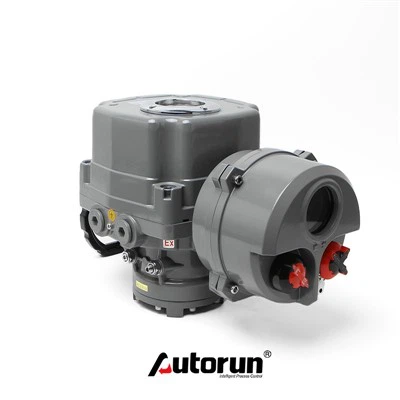
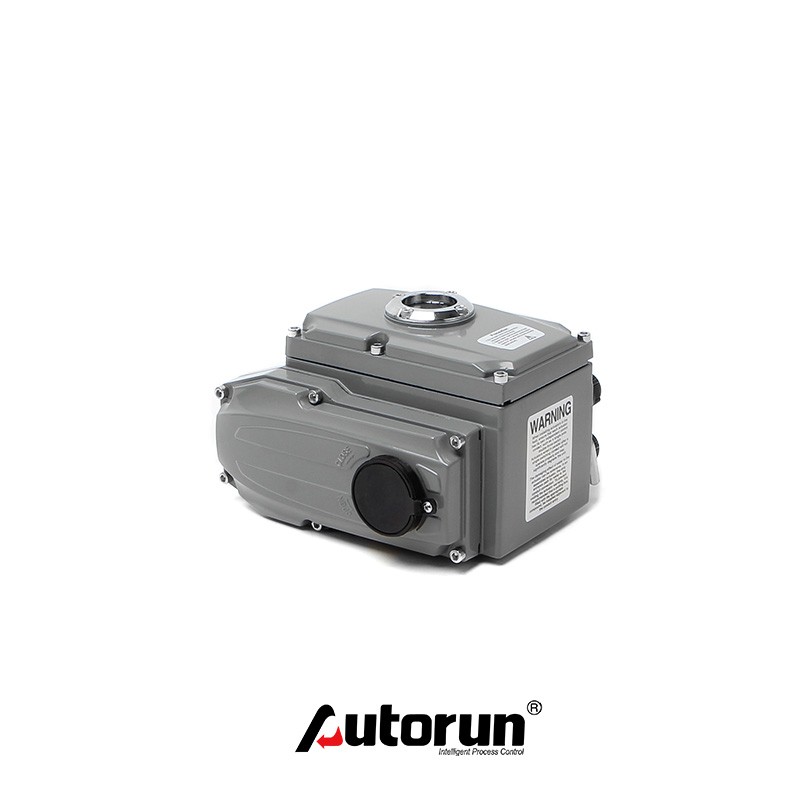


What is a Electric Rotary Actuator?
An electric rotary actuator is a mechanical device that uses electrical energy to create rotational motion. The rotational motion can be in either direction. They can be used for turning and placing parts, simple indexing table applications, and as a rotary axis in multi-axis applications. Rotary actuators can move things at any angle required, and can rotate a set amount such as 90, 180, or 360 degrees.


How Does an Electric Rotary Actuator Work?
An electric rotary actuator is a type of actuator that uses an electric motor to generate rotary motion. It consists of a motor (such as a DC or AC motor), a gear train (to reduce the speed and increase the torque of the motor), and a rotating shaft (to transmit the rotary motion to the load) otherwise known as a DC Gear Motor.
The motor is controlled by an electronic circuit that regulates the voltage and current applied to the motor. The circuit can be programmed to perform specific rotary movements or to respond to inputs from sensors or control systems.
Electric rotary actuators are commonly used in various applications, such as controlling valves, positioning machinery, and driving actuators in various industrial and manufacturing processes. They offer precise control, quick response time, and the ability to operate in harsh environments, making them a popular choice for automation and control systems.
Rotary actuators are designed so that the rotary output motion is a multiple of a 360° turn. Rotary actuators are primarily used for control valves where the rotary motion of the actuator is converted via a spindle to the linear motion required for the valve.

The Types of Rotary Actuator
Manual Rotary Actuators: Often a manual rotary actuator will employ a worm drive to increase the torque that a worker can physically apply to close a valve. Such actuators are common on quarter-turn butterfly and ball valves where the self-locking capabilities of many worm drives help to keep the valve shut. These actuators will often use large handwheels to further increase a worker's available torque. These devices are sometimes referred to as "gear operators" or "manual overrides" in the valve industry
Electric Rotary Actuators: An electric rotary actuator typically drives through a worm-gear reducer as well. It uses reversible motors to move the valves between open and closed positions. Models are available that will return the valve to a safe position upon power loss using either stored spring energy or battery or capacitor backup. Generally, the stored spring design requires a more complex transmission to wind the spring. Electric rotary actuators are easily adapted to distributed control systems. Handwheels are also generally provided for manual override, usually with a declutching feature.
Fluid-Powered Rotary Actuators: In fluid-powered rotary actuators such as hydraulic rotary actuators or pneumatic rotary actuators, fluid power from hydraulic oil or air is either applied to cylinders to move rack-and-pinion assemblies and scotch yokes, or to vanned rotors for direct shaft actuation. These actuators generally move between stops of 90° to 360°, depending on the rotational requirements of a given valve or component.
Rack-and-Pinion Rotary Actuators: Rack-and-pinion styles use at least one, and sometimes two or four, cylinders to drive the rack or racks (a bar with teeth to fit with the gear) past the pinion (which is a circular gear). The pinion rotates in response, driving the output shaft. A rack-and-pinion actuator will continue to revolve the pinion until it reaches the end of the stroke, although modulation is possible both with air and hydraulic systems. Hydraulic systems are better at holding a valve partway open because of the incompressibility of oil. In many instances, the pistons in the cylinders will work against large coil springs which provide the valve with the capacity to return to a safe position during a power interruption.
Scotch Yoke Rotary Actuators: Scotch-yoke actuators also use cylinders, generally single-acting with spring return. This type of rotary actuator features a sliding bar attached to a valve at one and a yoke on the other, which has a slot for a block that slides back and forth. The sliding block is attached to a piston, so as the piston moves the block pushes the yoke into rotating, which then moves the bar so the valve opens. At the same time, this compresses a spring to that if power were lost, the valve would snap shut. This style is usually limited to 90° of rotation and sees applications in quarter-turn valves. Double-acting scotch yoke actuators have no spring, so they need air pressure both to open the valve and to close it.
Vane Rotary Actuators: Hydraulic and pneumatic vane actuators use one or two vanes attached to a hub within a wedge-shaped or circular chamber, where the vane can pivot between 90 degrees to 280 degrees. Air or oil pressure is used to revolve the hub between stops and produce motion at the output stem. Double-vane actuators feature two opposite vanes to provide more torque, although the rotation is more limited than for a single-vane actuator in a full circular chamber. Bladder actuators, in a related design, feature two bladders to either side that push a lever through up to 100 degrees of a circle.
Helical Actuators: The helical rotary actuator style is used mainly with pneumatic pressure. It employs a cylinder and set of helical gears to convert a linear input to a rotary, oscillatory output. Three concentric cylinders make up a helical actuator; the inner cylinder (which is the drive shaft) will have three rotary pins, and three helical slots are machined in the outermost tube. The outermost tube also has three keys on its lower part to prevent it from moving too far, which move through groves in the middle cylinder. When a helical cylinder is in motion, air pressure pushes down on the outermost cylinder to open the valve, compressing a spring outside the outermost tube. As air pressure is released, the spring pushes the valve closed again.
The Applications of Electric Rotary Actuator
Automation and Control Systems
Electric rotary actuators can be used in various automation and control systems, such as assembly lines, material handling systems, and packaging machinery
Automotive Use
They are widely used in vehicles, for example to operate the windscreen wipers. these motors that make the wipers go back and forth utilize DC Gear motors.
Valve Control
Electric rotary actuators can be used to control fluid flow through valves in piping systems, HVAC systems, and other applications.
Machine Positioning
They can be used to adjust the position of machinery, such as conveyor belts, positioners, and material handling equipment.
Dampers and louvers: Electric rotary actuators can be used to control the flow of air or fluid in ducts, air handling units, and other systems.
Robotics
Electric rotary actuators are widely used in robotics, particularly for end-of-arm tooling and material handling.
Aerospace and Defense
Electric rotary actuators are used in various aerospace and defense applications, such as control surfaces and landing gear systems.
Our Certificate


Our Factory


Ultimate Guide for Electric Rotary Actuator
Q: How small can an actuator be?
Q: What are two types of rotary actuator?
Q: What is the difference between 12V and 24V actuators?
Q: How do I choose a rotary actuator?
Q: What are rotary actuators also called?
Q: What is an example of an electric actuator?
Q: How accurate is a rotary actuator?
Q: What is the torque of electric rotary actuator?
Q: What is the difference between a rotary actuator and a linear actuator?
Q: What is the range of a rotary actuator?
Q: What is the angle of a rotary actuator?
Q: What is the maximum rotational travel for a rotary actuator?
Q: How do you size a rotary actuator?
Q: What are four types of electrical actuators?
Rotary Electric Regulating Type Actuator.
Linear Electric Cut-off Actuator.
Rotary Electric Regulating Type Actuator.
SMC Electric Actuators.
Q: What is an example of an electric rotary actuator?
Q: How much can a 12 volt actuator lift?
Q: How strong are electric actuators?
Q: What is a Industrial electric rotary actuators?
We're known as one of the most professional electric rotary actuator manufacturers and suppliers in China, providing high quality products with competitive price. Please be free to buy durable electric rotary actuator in stock here from our factory. For pricelist and quotation, contact us.
Electric Ball Valve, Electric Butterfly Valve Actuator, Explosion Proof Actuator